Breaking
Content Warning
This story contains graphic depictions of child abuse, imprisonment, psychological manipulation, forced indoctrination, physical violence, and coerced complicity in torture and killing. It explores themes of identity erasure, hopelessness, and despair. Reader discretion is strongly advised.
Now.
The child whose name had been forgotten sat in the wagon and looked backwards at the dwindling form of the Veil Sanctorum. Her wrists and ankles chaffed in their chains and her body was covered with bruises. The abuse had not stopped during the two years of her captivity. Through it all she had struggled to maintain hope. To believe. Her name was gone, all she had known was gone. And soon, her spirit too would be gone – consumed by this hateful place.
“Nulk… Caius…” she whispered through trembling lips, “please, come soon.”
For two years, the girl who had been Bria, had suffered, and for two years she had clung to the certainty that her friend and her mentor would come for her. That knowledge, that belief, had kept her sane. When they took her name, she remembered theirs. When they beat her until she could not think, still she clung to those names. They had taken everything from her, and now, as tears drew lines down her cheeks beneath the mask she wore, she feared that they would take even those from her.
Then.
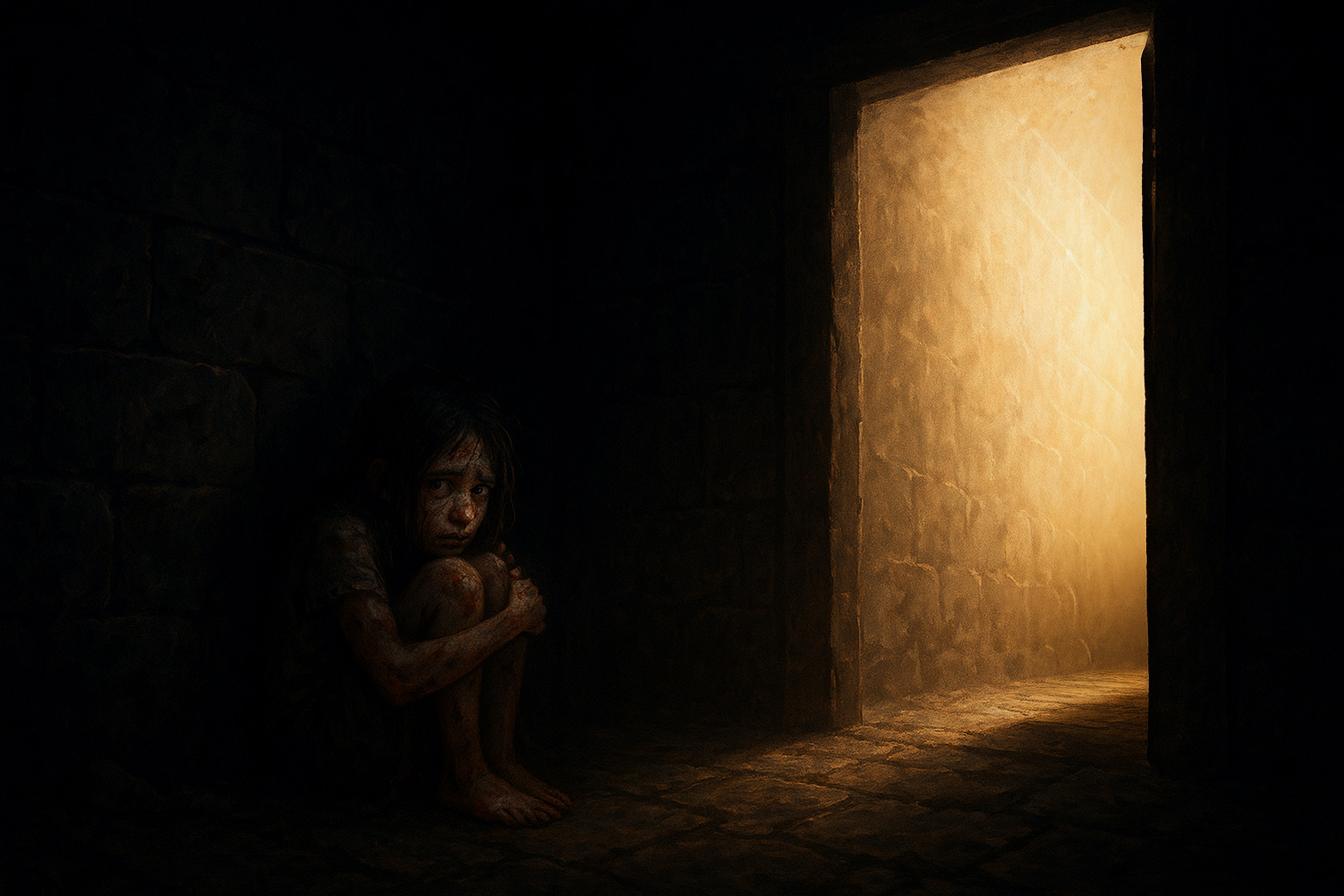
Those first days and weeks after she had been left behind were the worst of her life. Alone, in the dark, she had cried for Caius until her throat was raw. He was her protector. She knew he would come for her. He would not leave her to suffer in the cold, blackness of this place. When she felt alone, she cried for Nulk. She could see his smiling face. Nulk would never abandon her. He was her friend.
One day piled on the next. How long she called for them she couldn’t say. They did not try to stop her, they merely left her alone. In the dark. With nothing. No one.
Finally, when she was certain she would die, when she could not speak their names aloud, they came. The door burst open and a brilliance stabbed her eyes. Hands reached in with water and food. They cleaned her and whispered of a new name. They spoke of a savior, the Sovereign. They said he loved her, that only he could end her suffering. He wanted to help her. But, when in her delirium she uttered the names of Caius and Nulk, they left. And once again she was alone. In the dark. To suffer.
How many times did it repeat? A blinding brilliance and the hands, soft, careful. Whispered promises that this could all end. All she had to do was give them up. Turn to her new guardian. Turn to the Sovereign. And so she had. She stopped speaking their names, but in her heart she clung to them. They would come. They must.
Now.
The girl sat in silence. Her face was hidden beneath a wooden mask both suffocating and familiar. Outside, the wagon rolled steadily along a hard-packed road, past great columns of black obsidian, each a reminder that her fight was nearly finished. She was tired, so tired.
“They will not come.” a voice across from her said. Harsh. Cold. “They were never going to come. Bria was nothing but a toy to them. A weakness. Velthara has no need of such things.”
From behind the mask she sighed, her shoulders sagging as the truth settled at last. They were right. Her hopes had always been in vain. She belonged to them. The Shadowbinders. Perhaps she always had.
Then.
When the door opened and they came with the mask, the girl had backed away in horror. Her face was bruised, her eyes swollen, her teeth cracked and broken. They approached and took hold of her, she fought them fiercely, thrashing and biting until they struck her again and again, leaving her on the ground in a pool of blood and filth.
From somewhere above her came a voice, cold and uncaring. “Bria is dead.” it said. “Place the mask on your face.”
She shook her head. A blow split the air and her skull rang. Black spots swam before her.
“Bria is dead. Place the mask on your face.”
She whimpered her refusal. The next blow sent her sprawling. Snot and blood spilled from her nose. Her body ached. “Cauis…” she whispered desperately.
“Bria is dead. Place the mask on your face.”
“Bria is dead. Place the mask on your face.”
“Bria is dead. Place the mask on your face.”
Again and again the words came. A chant. A hammer. A truth.
When the door opened once more, the child crawled forward. Her face was a ruin, her body covered in swollen bruises. She lifted trembling arms towards them and they placed the mask in her fingers.
“Bria is dead.” She whispered. She placed the mask on her face and as they fastened the straps. She sighed. Nulk? she pleaded in her heart. Caius? she breathed. But the mask gave nothing back – only her own breath, stale and hot.
Now.
The girl that had once been Bria sat motionless in the wagon. The mask pressed hot against her skin. Soon she would take it off and Velthara would emerge. Soon it would end. Beyond the confines of the small wagon, the road wound downward as it made its final journey towards the Cradle of Ash.
Across from her, a boy sat. Something about him tickled at her memory. He was younger, maybe seven, and his body was covered with bruises. As her eyes found him, she flinched.
“This is Tavyn.” her handler said, voice cold as stone. “Brother to Bria. They will ask you to cut him.”
A whimper escaped the boy’s lips at the words and the handler turned empty eyes upon him, “You will open his throat and spill his blood into the dirt.”
Bria’s stomach turned. She felt sick. Her lips formed the name of her friends but the words refused to come. How many times had she uttered that same refrain? How many times had they gone unanswered?
“You can save him.” Her handler said, “Refuse, and we will set him free. But if you do, we return to the Veil and begin anew. Choose wisely, Velthara.”
A metallic smell filled the wagon as the boy wet himself.
Just once more, she told herself. Just once more and it will end. She wanted to whisper their names, but they died on her tongue. Somewhere inside, Bria recoiled. But Velthara—Velthara was ready to obey.
Then.
In the beginning, they only made her watch. They dragged prisoners before her, bound them, and chanted as the victims screamed. Bria shut her eyes against those screams, against the sudden, strangled ending of those screams. Her hands curled into fists and beneath her mask she chanted their names over and over and over: “Nulk, Caius, Nulk, Caius, Nulk, Caius.”
Then they gave her the knife. She threw it away and they struck her. Placed it again in her hands. She shook her head, horrified. They dragged her forward, kicking, screaming. Her protests meant nothing. “Cut.” they commanded.
She heard the whimpering of the victim. Heard his voice begging her not to do it. She refused. She tried to throw the knife away. They held her fast, drove her trembling hands forward. Hot blood spilled across her hands, soaking her fingers, searing her skin, choking her nostrils with the smell of iron. “Well done Velthara,” they whispered, “Well done.”
When she was alone again, she staggered to one corner of her room and vomited, whispering their names again and again – Caius, Nulk, Caius, Nulk – as if the litany could wash the blood away.
The next day they came again. She fought them. They beat her. She refused them. They forced her to kill. With the victim’s blood still warm on her hands, they soothed her. Salved her wounds. Promised her that soon it would end.
Day after day. Week after week. Victim after victim. The rituals never stopped. Each time they placed the knife in her hand, each time the blows fell heavier if she hesitated. And each time, the knife grew lighter. Easier.Until at last her lips shaped their chant. Her hands no longer trembled. And when the door shut and the mask pressed close, she whispered the names less and less.
Now.
The child lifted her chained hands and the tears stopped. She could take it no longer. She had fought the good fight. She had kept the faith. But they did not come. At last, after two years of suffering, she was ready to face the truth: they did not care about her. They had left her. They had forgotten her. Only the Sovereign remained – steadfast, certain, ready to end her suffering.
“Nulk.” she whispered – the last cry of a dying child. “Caius.”