Sunder the Peace
“Holy warriors will inevitably become the heretics they are sent to war against. Holy wars are unjustifiable by sane means, which is why insane soldiers are preferred.”
-“Axioms, Installment Six,” by Leothen Ardenbough.
Lumière
“Save him.” Queen Celestine d’Aurelle said to the seven men before her. “Whatever it takes. Wherever it takes you. Save him.”
At their front, Caius bowed his head slightly, “We will,” he promised.
Just behind him, Chris muttered. “Right, save the god who couldn’t save himself.”
Caius scowled at the younger man but Nulk talked over him, “There is no place we will not go to see him safe Your Highness.”
Celestine followed them with her eyes as they left. When the great doors to her grand hall swung closed behind them, she slumped back in her throne, her shoulders sagging. Despite being surrounded on all sides by people, she felt isolated, alone.
Rivelaine.
From his place tied to the stake and surrounded by a great pyre, Leothen Ardenbough looked out defiantly at the assembled crowd. Among them were the faces of his neighbors, his friends, even a few of his family.
How many times had he spoken with them? Treated with them. And how quickly they had betrayed him. When the Pyrric priest had come to Rivelaine, insistent that the town must be purged, they fell over themselves turning on him to save their own hides. They disgusted Leothen almost as much as the Pyrric fanatics.
“Do to me as you will,” Leothen snarled through swollen lips. “Murder me in the name of your empty god Syvren.”
The crowd did not disappoint.
Lumière, 3 days later
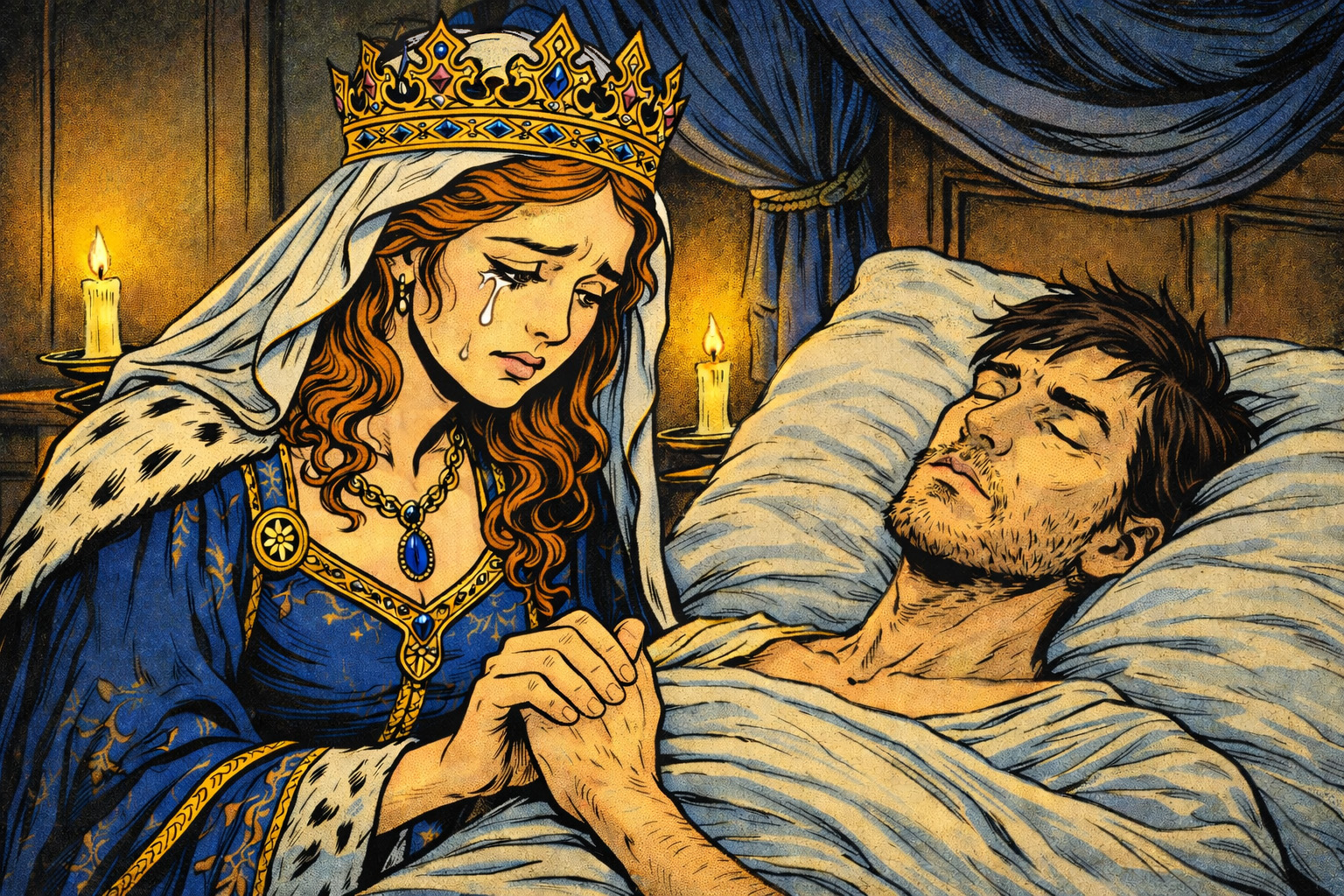
Lady Marisse Vale, Royal Vizier, waited outside the small room. Beyond the door, Queen Celestine sat at the side of the unmoving Donnil Phage, his hand in hers.
“How long?” Marisse asked the large man leaning against the wall across from the door.
“Three days,” Emeric du Marteaux, commander of the royal guard, replied. “She hasn’t left his side since they departed. Not to eat. Not to sleep.”
Marisse scowled, shook her head, “The Pyrrics are tearing the city apart—again. Did you know they buried a woman alive, alive!” She turned and looked in at Celestine, “We need her.”
Emeric nodded in assent. Marisse entered the small room. Looking at her liege—and friend—sadness filled her.
“My Queen,” she said gently.
Celestine turned, eyes wet, “He’s so helpless.” She whispered.
“My Queen,” Marisse said softly, “I am sorry. Truly.” She hesitated, then continued. “Something has happened in Rivelaine.”
“Later,” Celestine said, turning back to Donnil.
“This cannot wait,” Marisse replied.
“It will,” Celestine replied, sorrow heavy in her voice, “It must.”
“Celestine,” Marisse said quietly.
“I said later,” Celestine snapped, anger cutting through the grief.
For a moment Marisse hesitated. Then she bowed and departed.
Valeronne, Later
Chya Qioma stood, face and hands smeared with ash, cradling the body of a boy not more than twelve in her arms. His body was badly burned and she had only just pulled him from the still-smoldering ruin of what once had been the Lanterne-Basse district. Now, after the ‘purification’ little remained of the riverside ward.
Tears tracing lines through the soot she looked out at a crowd and shouted, “Look!” Gently she lifted the body before her, “Look!” She commanded again. “Look at what they have done to your sons. Look at what they have done to your home.” She collapsed to her knees, “It cannot continue. It cannot.” she muttered quietly.
Lumière, Later Still
In the months since Caius had led his small band south, Celestine rarely left Donnil’s side. She no longer held court. She refused to pass judgment or grant mercy. The petitions of her people went unanswered, as did those of foreign dignitaries. Her days—and many of her nights—were spent at Donnil’s bedside. What little authority she still exercised was given there, quietly, between shallow breaths and long silences.
Lady Marisse watched helplessly as tensions once kept in check by the Crown began to unravel. House Marivelle and House Aramonte, long rivals, slid into open warfare, and the Commander of the Crown refused to intervene without a direct order from his Queen. When the Master of Coin declined to release funds in the absence of a royal decree, soldiers’ wages fell into arrears and the Crown’s debts went unmet. In the streets, with neither Syvren nor Usef to restrain them, the Pyrric faction flourished. Their doctrine spread through Gallance like wildfire—fed by fear, sanctified by flame, and unchecked by law.
Once more finding herself outside the small chamber where Donnil lay, the Royal Vizier sighed, looked down at the reports, steeled herself, and entered.
“My Queen.” she said, iron in her voice, “You must see…”
“He is dying.” Celestine said, never looking at her, “I can see it, his body withers away. It won’t be long now.”
“My Queen,” Marisse repeated, “Gallance is dying. The people riot for want of food. Your noble houses are at war. Your generals raise armies against you, and the Pyrrics burn your country in the name of Syvren. Gallance needs you!” She urged.
Slowly Celestine rested a hand on Donnil’s forehead and turned to Marisse, “I don’t know if he’ll make it through the week.”
“My Queen,” Marisse retorted, anger now in her voice, “Your country will die if you do nothing!”
For a long moment Celestine just looked at Marisse, the Queen’s eyes never focusing clearly, then she turned back to Donnil, “Hurry, Caius.” She whispered. “Hurry.”
Montreval, Some Months later
Warlord Chya rode at the vanguard of a long column of Coalition soldiers. In the months since Valeronne, she had built a great host. Messengers had flown across Gallance, and while most of her army was drawn from Gallantian ranks, there marched among them Braxylian cavalry, Tarithanian foot, and even a company of archers from distant Aethelier. More arrived with every passing week—refugees driven from their homes by the Pyrric crusade, armed now and sworn to see it ended.
Behind her army, the once-mighty town of Montreval lay silent.
Chya had pursued a Pyrric cell here and, when they took shelter within the city, demanded they be surrendered. The town refused, whether out of fear, loyalty, or desperation, Chya didn’t care. She judged Montreval complicit and ordered it taken. The Coalition breached its gates at dawn and by nightfall, nothing remained.
No person. No animal. Neither cattle nor oxen nor sheep. Every living thing within the walls of Montreval that had been touched by Pyrric doctrine was expunged. Chya had overseen the work herself, methodical and unflinching. Her armor was stained red with the blood of Montreval, but she would not stop. Not until every trace of the Pyrrics had been scoured from the face of Veylantia.
Lumière, Later
“She will not listen,” Royal Vizier Marisse said.
“She must,” the High Justicar replied. “If she does not act, the Prince will die.”
The messenger had arrived that morning, having left Castle Lenn the prior day. The mad ride had killed over a dozen horses and nearly the rider himself—but the message had arrived. Barely. The Coalition Army moved against Lenn. They would be there before twelve days passed.
“I tell you,” Marisse continued, “she will not listen.”
Lord Marshal Marcel Renaudine spoke up, “We need only her assent. The army stands ready despite the hardships.” He cast a sour glance at the Master of Coin, “For our Queen, they will march. We can be ready by morning and at Lenn in ten days. The Prince can hold until then.”
Marisse shook her head, “You will not get it.”
“He will,” Emeric stated flatly. “I will see to it.”
Emeric du Marteaux entered the small chamber where Celestine sat her vigil. In all the months, he had not once tried persuading her to come out. He had watched over her silently, diligently. Now, the time for silence was over. “My Queen,” he said urgently, bowing, “We have received word that the Coalition Army moves against Lenn.”
He did not know what reply he expected, but when Celestine said nothing, he continued, “The garrison there cannot hold out long. They are too few.”
Celestine still ignored him, and he pressed more urgently, “My Queen! Your brother commands there, if it falls—and it will—he will be killed. The Coalition leaves no survivors.”
Still Celestine didn’t react. Emeric stepped forward and hauled her up from her seat, “My Queen, you must…”
“No!” she screamed frantically, “Take your hands from my person!”
“They will die!” Emeric shouted back. “Your brother, his wife, your nieces and nephews—your family! All of them. You must act.”
Celestine tore herself from him and staggered back towards the small chamber, “I cannot leave him,” she breathed, “I cannot.”
“You can,” Emeric said, and again he took her by the shoulders, “and you will.” He pulled her from the chamber.
Frantically she struggled against him, but his strength was far beyond hers. “Release me!” she commanded. When he refused, she fought with feral desperation until at last she shrieked, “Guards! Seize him!”
Her guards looked at one another, and then at their commander, and finally stepped forward, pulling Emeric off her. Freed, Celestine staggered and scampered back to the small room where, as she entered, she gasped. Donnil lay within, convulsing.
“You!” she shouted, turning back to Emeric, “You poisoned him! You tried to murder him!”
“My Queen,” Emeric said, raising his hands.
“Execute him!” she spat the words, “Hang him.” She shouted and then rushed to Donnil’s side, slamming the door behind her.
Lumière, Later
The old crone watched from the balcony of Celestine’s private bedchamber as the body of Chevar Emeric du Marteaux swayed on the gallows far below. The morning wind tugged at him like an impatient hand, the creak of the rope carrying even to her high vantage.
A smile creased her wrinkled face and with a soft chuckle, she turned and slipped back into the Queen’s private chamber. So much suffering, born of grief, fear, and love twisted just enough to be—useful.
Mortal hearts were so easy to steer. When she was finished here, Gallance would undo itself.