Tarithan
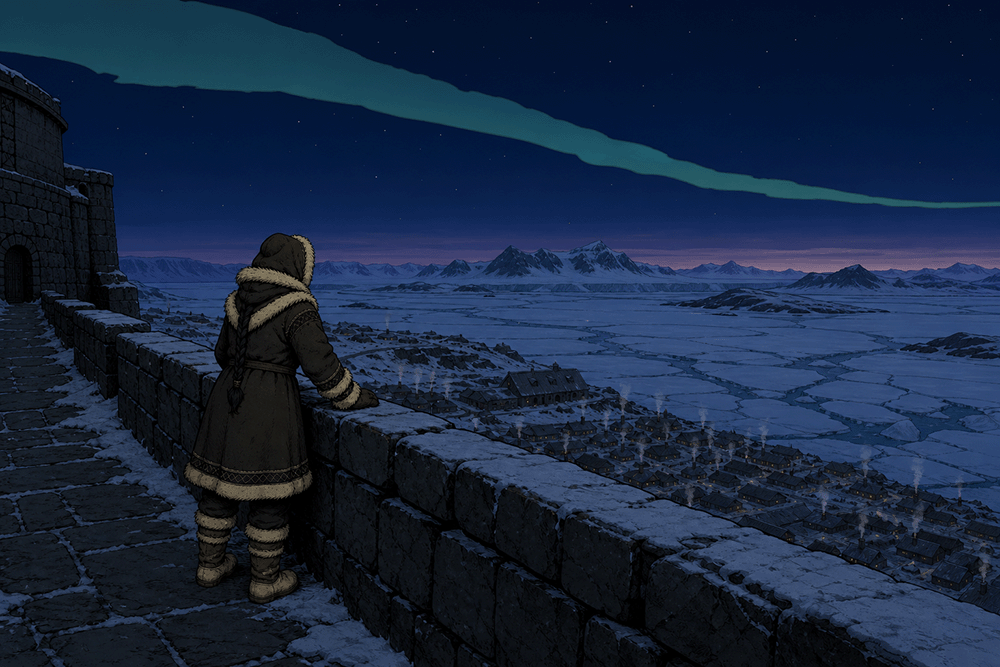
Tarithan is a land of bitter cold with winters that never see daylight and where even the warmest day of summer fails to reach above freezing. Its people reflect the landscape. They are tough, patient, and long accustomed to hardship. Yet they endure, for above all, they are survivors. They have lived on the bitter edge of extinction for as long as anyone can remember but still they remain. Their life is hard, their resources few, and every year the cold advances.
Arcalilyte
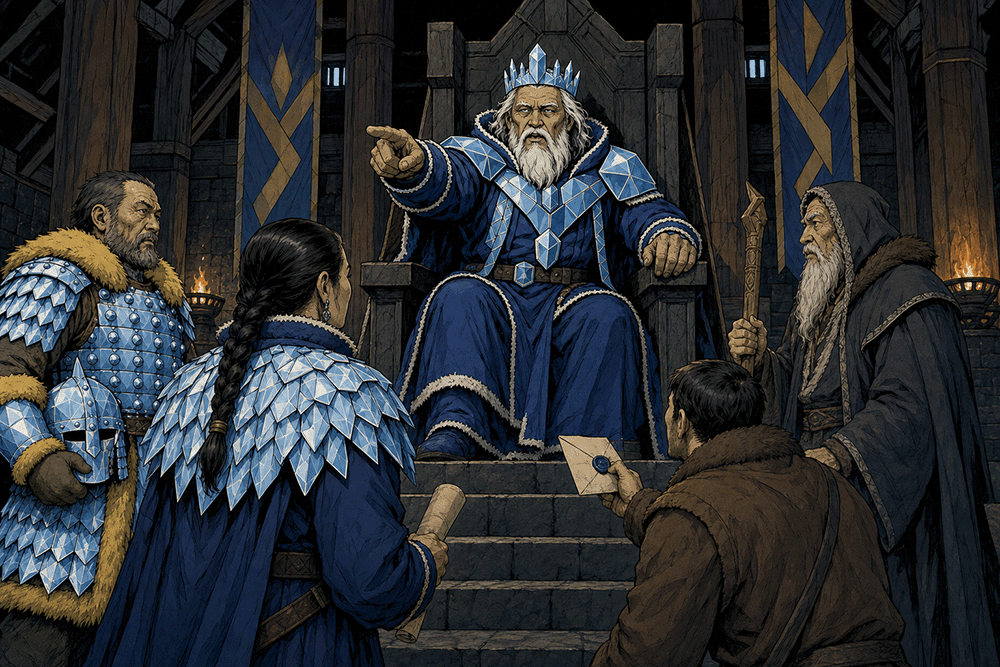
Tarithan is the one place in all Veylantia where the crystal arcalilyte can be found. Arcalilyte is remarkably durable and can, when heated, be worked not unlike metal. It makes excellent armor and weapons and is both lighter and stronger than steel. The Tarithanians mine arcalilyte and use it as trade for staples they need such as grain and timber.
History
Sarivan Bael founds the Winter Road
Daluvin crowned king of Tarithan
Southern Campaigns Begin
Southern Campaigns End
Racivan ascends to throne
Failed assassination of Racivan
Racivan is killed by Usef
Tarithan’s history stretches backwards beyond the current age, though most of it is lost to memory and time. Scattered writings speak of a battle with an enemy long forgotten that ended with victory but cast Tarithan into a long period of darkness. The modern country traces its emergence from that fugue to when Sarivan Bael discovered the Enkut and established trade across the Winter Road.
Sarivan left his son a solid foundation on which to build the Winter House Mercantile. The power of the Bael family trading house would continue to grow until, in 2947, Daluvin Bael proclaimed himself king of Tarithan. His opponents were silenced in one bloody stroke and the line of Bael assumed power.
The Bael family ruled for more than two centuries and proved increasingly tyrannical. Under their reign, the country’s mines were seized as property of the crown, and any who spoke against them were enslaved and their families murdered. Kidnapping, murder, and corruption became rampant. It ended in 3219 when the slave Usef Garrich killed King Racivan Bael, who left no heir, and the enslaved rose up throughout Tarithan.
In the years since Racivan’s death, an uneasy peace between the merchant lords has emerged. Everyone assumed Usef would step into the void, but instead he left the country. House Kest, who controlled the Winter Road for the crown, claimed conservatorship of the country. When House Dask attempted to do the same, Maruvan Kest forged an alliance with the remaining generals, and to avoid open warfare Taluris Dask fell in line. This triad of power holds still: Kest controls the Winter Road, Dask the mines, and a professional soldier-class has emerged under the generals who keep the two from destroying the country.
People
Tarithan has three classes of people. The great mercantile lords rule the country, living lavish lifestyles fueled by the slaves they own. The vast commoner class does most of the work needed for the country, working the fisheries, hauling cargo, cutting ice, hunting seal, and crewing the ships which sail Tarithan’s brine seas. They own nothing, and live at the whim of the merchant lords. Finally the slaves, born or cast into it as punishment, do the hardest and most dangerous tasks. They work the mines, drawing arcalilyte and coal from the deep shafts. They cut the mineral salt from the dead lick on the coast. They render the seal-oil and labor in the places too cold, too deep, or too deadly for any who can refuse.
Several large, briny inland seas remain open year-round in Tarithan, despite the bitter cold temperatures, and most Tarithanians live in settlements clustered around them. Villages and towns beyond these shores usually exist to support mines, overland trade routes, or other infrastructure.
Tarithan sits in the polar circle near the North Pole. During its winter months, the sun never rises and temperatures plunge to 60 below. This forces people indoors and the country slows, though her mines never fully stop. In the summer, the sun never sets and temperatures climb until some days come close to thawing. The warm months see a flurry of activity as the entire country prepares for the long, still quiet.